# Turning Airport Transfers into a Business Advantage in Asia
Tokyo, Shanghai, Singapore, Hong Kong — for professionals moving between Asia's business hubs, the journey between airport and destination is more than just transit. It's time that can be used or wasted, and fatigue that compounds or gets managed. Both affect performance the next morning.
## City-by-City: What the Journey Actually Looks Like
### Tokyo (Narita & Haneda)
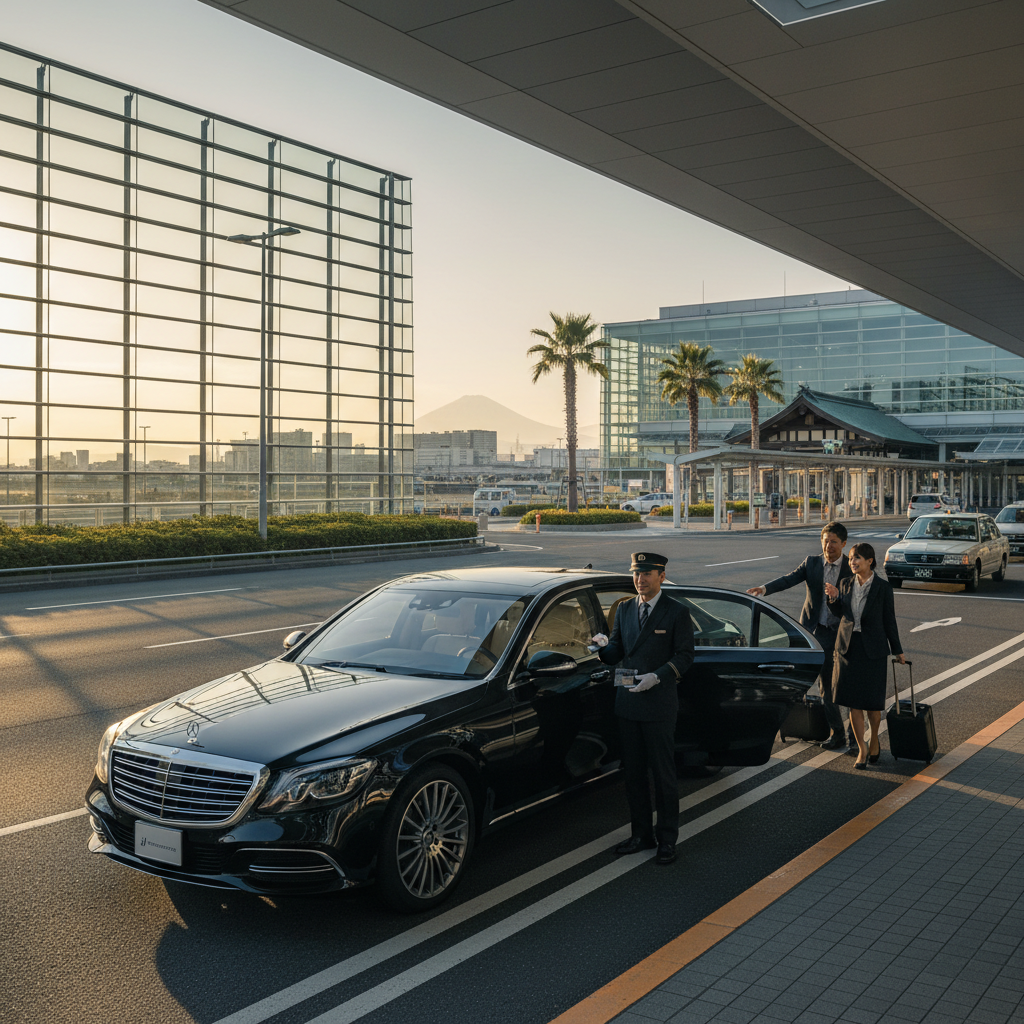
From Narita to central Tokyo, the train takes over an hour. Reviewing presentation materials while managing luggage through transfers isn't realistic. In a private car, you can open a laptop in the back seat and turn travel time into preparation time. In-car Wi-Fi comes standard.
### Shanghai (Pudong & Hongqiao)
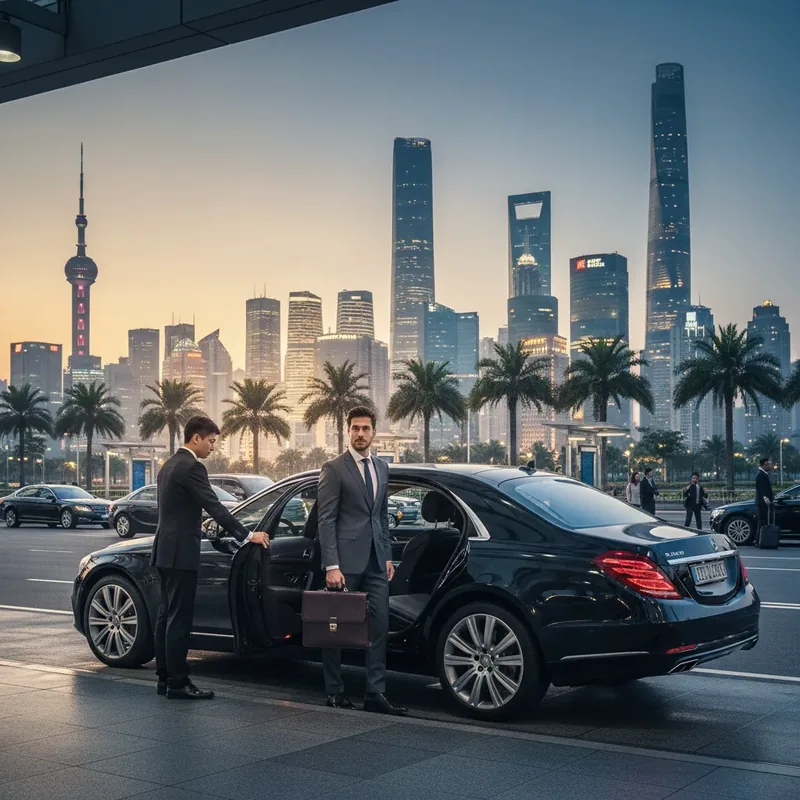
Shanghai has two international airports. Pudong is about 30km from the city; Hongqiao is about 15km. The Maglev from Pudong to Longyang Road takes just 8 minutes, but the connections after that are cumbersome. A Japanese-speaking driver takes you from arrivals directly to your hotel — no language barrier, no transfers.
### Singapore (Changi)
Changi connects to the city by MRT, but with heavy luggage or a hotel off the main line, a private transfer is more reliable. Singapore has relatively light traffic; the ride from Changi to the CBD takes 20-35 minutes. Late-night arrivals are handled consistently.
### Hong Kong (HKG)
The Airport Express is excellent, but depending on your destination in Kowloon or on Hong Kong Island, you'll often need a taxi from the station. For VIP hospitality, a car that goes directly from the airport to the venue makes a cleaner impression on guests.
## What a Corporate Account Actually Solves
Expense reporting is monthly at most companies. Keeping receipts, filing claims, reconciling records — it adds up for both travelers and finance teams.
With a corporate account, a single invoice arrives at month-end. Usage history by employee is available for review, which also discourages misuse. Invoices are issued in compliance with Japan's invoice system (インボイス制度).
## Managing Cumulative Travel Fatigue
Post-flight fatigue compounds with every transfer. Arriving at a hotel after carrying bags through multiple train connections, with no energy left to prepare for the next morning's meeting — it's a familiar experience for frequent travelers.
Private transfers remove one layer of that fatigue. The difference seems small in isolation. Over a week of back-to-back travel, it adds up.
Tokyo, Shanghai, Singapore, Hong Kong — for professionals moving between Asia's business hubs, the journey between airport and destination is more than just transit. It's time that can be used or wasted, and fatigue that compounds or gets managed. Both affect performance the next morning.
## City-by-City: What the Journey Actually Looks Like
### Tokyo (Narita & Haneda)
From Narita to central Tokyo, the train takes over an hour. Reviewing presentation materials while managing luggage through transfers isn't realistic. In a private car, you can open a laptop in the back seat and turn travel time into preparation time. In-car Wi-Fi comes standard.
### Shanghai (Pudong & Hongqiao)
Shanghai has two international airports. Pudong is about 30km from the city; Hongqiao is about 15km. The Maglev from Pudong to Longyang Road takes just 8 minutes, but the connections after that are cumbersome. A Japanese-speaking driver takes you from arrivals directly to your hotel — no language barrier, no transfers.
### Singapore (Changi)
Changi connects to the city by MRT, but with heavy luggage or a hotel off the main line, a private transfer is more reliable. Singapore has relatively light traffic; the ride from Changi to the CBD takes 20-35 minutes. Late-night arrivals are handled consistently.
### Hong Kong (HKG)
The Airport Express is excellent, but depending on your destination in Kowloon or on Hong Kong Island, you'll often need a taxi from the station. For VIP hospitality, a car that goes directly from the airport to the venue makes a cleaner impression on guests.
## What a Corporate Account Actually Solves
Expense reporting is monthly at most companies. Keeping receipts, filing claims, reconciling records — it adds up for both travelers and finance teams.
With a corporate account, a single invoice arrives at month-end. Usage history by employee is available for review, which also discourages misuse. Invoices are issued in compliance with Japan's invoice system (インボイス制度).
## Managing Cumulative Travel Fatigue
Post-flight fatigue compounds with every transfer. Arriving at a hotel after carrying bags through multiple train connections, with no energy left to prepare for the next morning's meeting — it's a familiar experience for frequent travelers.
Private transfers remove one layer of that fatigue. The difference seems small in isolation. Over a week of back-to-back travel, it adds up.